


How to Run Faster: 10 Tips to Improve Your Running Pace
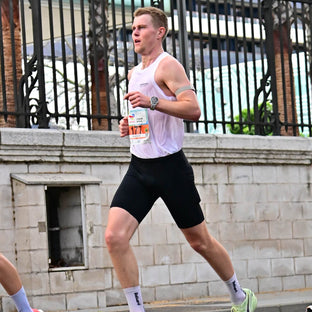
This article was written with input from
Nikolaj Bonde
Running coach and elite runner
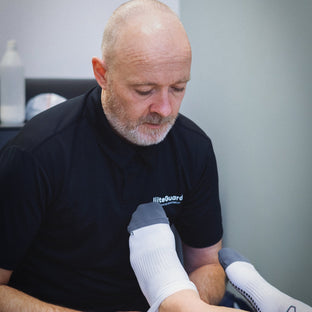
This article was written with input from
Nicklas Falkesgaard Pedersen
Physiotherapist
Want to knock seconds, or even minutes, off your time?
Running faster rarely comes from running hard every day. It comes from the right mix of easy miles, a few well-chosen hard sessions, strength training and patience. Here are 10 tips to improve your running pace, whether you're chasing a faster 5K or a marathon personal best.
In this article, you'll learn:
- 10 ways to increase your running speed
- Which workouts make the biggest difference
- How long it takes to get faster
10 tips to run faster
1. Run most of your miles easy
It sounds backward, but easy running is the foundation of speed. It builds your aerobic base and lets you recover, so you have energy for the hard sessions that make you faster.
"The hard sessions are rarely the problem. It's the easy days in between that you need to respect, because they're what keeps you injury-free," says running coach Nikolaj Bonde.
Aim for about 75-80% of your running at a conversational pace. Our guide to zone 2 running shows you how.
2. Add one interval session a week
Intervals teach your body to run faster than your usual pace. Two of Nikolaj Bonde's favorite sessions:
- Threshold intervals: 4-8 repeats of 1,000 meters at roughly your one-hour race pace. Jog or walk for 2 minutes in between.
- Speed in your legs: 4-8 x 400 meters at 5K pace, then 4-8 x 200 meters at 3K pace, with 200-300 meters of jogging between.
New to intervals? Start with 6 x 1 minute fast with 2 minutes of easy jogging between, and build from there.
3. Do a tempo run
A steady, comfortably hard run raises the pace you can hold before your legs start to burn. Read our guide to tempo runs for 3 workouts.
4. Play with your pace
A fartlek mixes fast and easy running by feel. It's a fun way to add speed without a strict plan. See our fartlek workouts.
5. Run hills
Running uphill builds strength and power in your legs, and the slower speed puts less load on your body than flat sprints. Try 6-8 x 60-90 seconds up a steady hill, and jog easily back down.
6. Strength train twice a week
Stronger legs, hips and core make every stride more efficient and help you hold your form when you get tired. Start with our strength training for runners and gluteus medius exercises.
7. Work on your form and cadence
Small changes, like landing closer under your hips and taking slightly quicker steps, can save energy at every pace. Read our guides to running form and running cadence.
8. Build up gradually
Doing too much too soon is the fastest way to get injured and lose fitness.
"I recommend increasing your running distance by no more than 10% at a time. Then run that distance 3-4 times without problems before you increase it again," says physiotherapist Nicklas Falkesgaard Pedersen, co-founder of liiteGuard.
9. Sleep and eat enough
Your body gets stronger while you recover, not while you train. Aim for 7-9 hours of sleep and enough food, especially carbohydrates and protein, to fuel your training and rebuild your muscles.
10. Set a goal, plan your week and be patient
A race or a time goal gives your training direction. Plan your runs at the start of the week, and make sure you practice the distance you want to get faster at.
Then give it time. Some runs will feel heavy, and that's normal. Progress comes from showing up week after week, not from any single session.
How long does it take to run faster?
Most runners notice a difference after 4-8 weeks of consistent training with one or two quality sessions a week. Beginners often improve quickly, while experienced runners need more patience for smaller gains.
Remember to warm up properly before every hard session. Our guide to warming up before running has a simple routine. Light, close-fitting gear also helps you move freely when you pick up the pace, like our running shorts and running singlets.
Frequently asked questions about running faster
What is the trick to run faster?
There's no single trick. The combination that works for most runners is mostly easy running, one or two hard sessions a week, strength training and consistency over months.
Is a 25-minute 5K slow?
No. A 25-minute 5K means a pace of about 8:03 per mile (5:00 per km), which is faster than most recreational runners.
Can you run faster without running more?
Yes, to a point. Swapping one easy run for an interval session, adding strength training and sleeping more can all make you faster without adding miles.