


Fartlek: What It Is and 4 Fartlek Workouts to Try
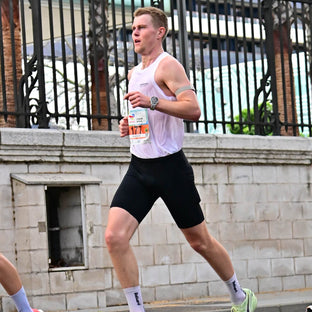
This article was written with input from
Nikolaj Bonde
Running coach and elite runner
Bored of running the same pace on every run?
Then try a fartlek. It's a flexible form of speed training where you mix fast and easy running by feel, without a track and often without a watch. It builds both speed and endurance, and most runners find it a lot of fun.
In this article, you'll learn:
- What fartlek means and where it comes from
- The benefits of fartlek training
- 4 fartlek workouts, including the 5-4-3-2-1
- How fartlek differs from intervals and tempo runs
What is a fartlek run?
Fartlek is Swedish for "speed play." The method was developed in the 1930s by Swedish coach Gösta Holmér, who had his runners vary their speed freely on forest trails.
In a fartlek, you run continuously but change your pace along the way. You surge for a while, then ease off until you're ready for the next one. How long and how fast is up to you.
The benefits of fartlek training
- Speed and endurance in one: You work at several intensities in the same run.
- Flexible: You can do it anywhere: on the road, on trails or in the park.
- Race practice: Surging and recovering on the move is what you do when you pass someone or attack a hill in a race.
- Fun: Playing with your pace breaks up the routine and keeps you motivated.
Does fartlek improve VO2 max?
It can. The hardest surges in a fartlek push you close to your maximum effort, and regular hard running is what raises your VO2 max over time. Combine fartlek with plenty of easy running for the best effect.
4 fartlek workouts to try
Warm up with 10-15 minutes of easy running before each workout, and finish with 5-10 minutes of easy jogging.
1. Nikolaj Bonde's classic fartlek
One of running coach Nikolaj Bonde's favorite sessions is the free fartlek. Run for 25-45 minutes with no fixed rules. Mix surges of anything from 15 seconds to 8 minutes, and take recovery whenever you need it.
2. The 5-4-3-2-1 fartlek
Run hard for 5 minutes, then 4, 3, 2 and 1 minute, with 1 minute of easy jogging after each surge. Run each surge a little faster than the one before. The whole workout takes 19 minutes, not counting the warm-up.
3. Landmark fartlek
Pick a target ahead of you, like a lamp post, a tree or the top of a hill, and run fast to it. Jog easily until you feel ready, then pick the next target. It works well with a friend who chooses the landmarks.
4. Music fartlek
Run fast every time the chorus starts, and ease off during the verses. The surges are short and unpredictable, which makes this a good first fartlek.
Fartlek vs. intervals vs. tempo runs
- Intervals: Fixed distances or times at a set pace, with planned rest. Very structured.
- Tempo run: One steady, comfortably hard effort. Read more in our guide to tempo runs.
- Fartlek: Fast and easy running mixed by feel. The most relaxed of the three.
All three can be part of the same training week. Most runners do one or two harder sessions a week and run the rest at an easy pace, as described in our guide to zone 2 running.
Fartlek for beginners
Start small. During an easy 30-minute run, add 6-8 surges of 20-30 seconds where you speed up to a pace that feels fast but controlled. Jog easily until you're fully recovered before the next one.
Keep your form relaxed when you speed up. Short, quick steps and an active arm swing help, as you can read in our guide to running form. For more ideas on getting quicker, see our 10 tips to run faster.
Frequently asked questions about fartlek
What is a fartlek workout?
It's a continuous run with unplanned changes of pace. You decide when to speed up, how long to surge and how much to recover.
How often should you do a fartlek?
Once a week is enough for most runners. Count it as one of your harder sessions, and keep the day after easy.
Is fartlek good for beginners?
Yes. Because you control the effort, it's one of the easiest ways to start with speed training. Keep the surges short at first.