


What Is a Tempo Run? How to Do It and 3 Workouts to Try
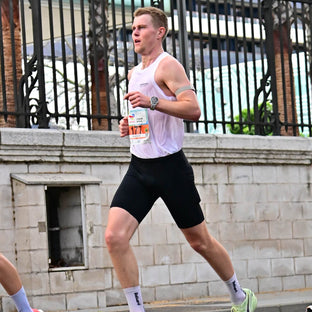
This article was written with input from
Nikolaj Bonde
Running coach and elite runner
Want to hold a faster pace for longer?
Then the tempo run belongs in your training. It's a steady, comfortably hard run that teaches your body to sustain speed, and it's one of the most effective workouts for every distance from 5K to the marathon.
In this article, you'll learn:
- What a tempo run is and why it works
- How fast and how long a tempo run should be
- 3 tempo workouts to try
- The difference between a tempo run and a fartlek
What is a tempo run?
A tempo run is a sustained effort at a pace that feels comfortably hard. You're working, but you're in control. Most runners can say a few words at a time, but not hold a conversation.
The pace sits close to your lactate threshold: the point where your body starts producing lactate faster than it can clear it. That's why tempo runs are also called threshold runs.
Why tempo runs make you faster
- A higher threshold: You push the point where your legs start to burn to a faster pace.
- Better pace control: You learn how a hard effort you can actually hold feels, which helps on race day.
- Mental strength: Holding a steady effort when it gets uncomfortable is a skill you can train.
How fast should a tempo run be?
Aim for the pace you could race at for about one hour. For most runners, that lands somewhere between 10K pace and half marathon pace.
- Effort: About 7 out of 10.
- Heart rate: Roughly 80-90% of your max heart rate, which is zone 4 in the most common five-zone model.
- Talk test: Short phrases are possible. Full sentences are not.
Start a little too slow rather than too fast. A good tempo run feels even from start to finish, not like a race you hang on to.
How long should a tempo run be?
Most tempo sessions include 20-40 minutes of tempo running, plus a warm-up and a cool-down. Beginners can start with 15 minutes and add a few minutes every couple of weeks.
You can run the tempo part in one block or split it into intervals with short breaks. The breaks let you run at the right pace for longer.
3 tempo workouts to try
Always start with 10-15 minutes of easy running and finish with 5-10 minutes of easy jogging. See our guide to warming up before running for a simple routine.
The last two workouts are favorites of running coach Nikolaj Bonde, who comes back to them again and again in his own training.
1. The classic 20-minute tempo
Run 20 minutes continuously at tempo pace. It's simple, and it's the best way to learn how the effort should feel.
2. Threshold intervals
Run 4-8 x 1,000 meters at the pace you could hold for an hour, with 2 minutes of easy jogging or brisk walking between each one. Start with 4 and add one repeat at a time.
3. Long tempo blocks
Run 2-3 x 12-16 minutes at half marathon pace, with 5 minutes of easy jogging between the blocks. This one is ideal if you're training for a half or full marathon.
Tempo run vs. fartlek
A tempo run is controlled and steady. You hold one pace for a set time or distance.
A fartlek is playful and unstructured. You mix fast and easy running by feel, often without a watch. Both build speed, but the tempo run is better for learning to hold a race pace. Read more in our guide to fartlek training.
How often should you do tempo runs?
Once a week is plenty for most runners, often alternating with an interval session. Run the rest of your week at an easy pace, so you're fresh enough to make the hard sessions count. Our guide to zone 2 running explains how easy your easy runs should be.
For more ways to pick up the pace, see our 10 tips to run faster.
Frequently asked questions about tempo runs
Is a 20-minute tempo run good?
Yes. Twenty minutes at tempo pace is a classic session and a great place to start. As you get fitter, extend it to 30-40 minutes or split it into longer intervals.
What is a tempo run for 5K training?
The pace is the same as for other distances: slower than your 5K race pace, around the pace you could hold for an hour. For 5K training, 15-25 minutes of tempo running is usually enough.
Is a tempo run the same as a threshold run?
Mostly, yes. Both terms describe running at or just below your lactate threshold. Some coaches use "tempo" for a slightly easier, longer effort, but the idea is the same.