


Running Cadence: What's a Good Cadence and How to Improve It
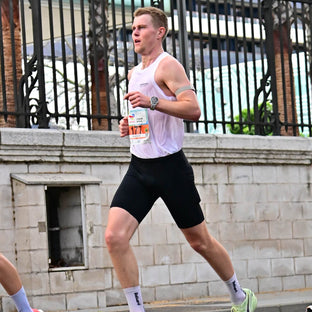
This article was written with input from
Nikolaj Bonde
Running coach and elite runner
Have you noticed the cadence number on your running watch?
Running cadence is the number of steps you take per minute. It's one of the simplest ways to look at your running form, and small changes can make your stride lighter and more efficient.
In this article, you'll learn:
- What running cadence is
- What a good cadence for running is
- Whether 150 or 160 steps per minute is too slow
- How to increase your cadence safely
What is running cadence?
Cadence, or step rate, is the number of steps you take per minute (spm), counting both feet. Most running watches measure it automatically.
No watch? Count how many times your right foot hits the ground in 30 seconds, then multiply by four.
What is a good cadence for running?
Many recreational runners land somewhere between 150 and 170 steps per minute on easy runs. Elite runners are often above 180, especially at race pace.
"For most runners, I recommend a cadence somewhere around 170-180 steps per minute," says running coach Nikolaj Bonde.
There's no magic number, though. The famous 180 comes from a count of elite runners at the 1984 Olympics. Your ideal cadence depends on your height, your leg length and how fast you run.
Is 150 or 160 cadence too slow?
Not necessarily. Cadence goes up with speed, so 150-165 is common at an easy pace, especially for taller runners. It only becomes a problem if you're overstriding, which means taking long steps where your foot lands far in front of your body.
A cadence around 140 usually means very long, slow steps. In that case, a gradual increase is often worth trying.
Why does cadence matter?
A low cadence often goes hand in hand with overstriding. When your foot lands in front of you, you brake a little with every step, and your knees and hips take more of the force.
A study of 45 recreational runners found that increasing cadence by 5-10% reduced the load on the knees and, at 10%, on the hips too, because your steps get shorter and your foot lands closer to your body.
Nikolaj Bonde also sees a low cadence as one of the most common mistakes in his technique sessions. Read about the other three in our guide to running form.
How to increase your running cadence
- Find your baseline. Check your average cadence on your watch after a few easy runs.
- Add 5%. If you're at 160, aim for about 168.
- Use a beat. Run to a metronome app or to music with the right tempo in beats per minute.
- Start in short blocks. Hold the new cadence for 1-2 minutes at a time during easy runs, then build up.
- Keep the same pace. The goal is shorter steps at the same speed, not running faster.
- Give it time. It usually takes a few weeks before the new rhythm feels natural.
Running drills like high knees, A-skips and strides help you get used to quicker steps, and strong hips make the change easier. Add our gluteus medius exercises to your week, and use the drills from our running form guide as part of your warm-up before running.
Frequently asked questions about running cadence
Does running cadence count both feet?
Yes. Cadence is the total number of steps per minute, left and right foot together.
Should your cadence be the same on easy and fast runs?
No. Your cadence rises naturally when you run faster. When you track your progress, compare your cadence at the same pace.
Is a higher cadence always better?
No. Very short, rushed steps can feel tense and waste energy. Aim for a rhythm that feels quick and light without forcing it.